AI in B2B Sales Software: The Promise Is Real. The Hype Isn't.
In wholesale, an AI that's wrong once can cost an account. The questions that separate real AI from marketing.

AI is going to reshape B2B sales software. But in wholesale, the tolerance for a confident wrong answer is far lower than in consumer apps — and that changes everything about how AI should be built and bought.
Why B2B is different
When a recommendation engine suggests the wrong price or an out-of-stock item to a consumer, it’s a minor annoyance. In wholesale distribution, it’s a damaged relationship, a lost sale, and support overhead that erases the efficiency you were chasing. Prices follow contracts. Product visibility is tied to accounts. A rep who gives a buyer bad information once can spend months rebuilding trust that vanished in seconds. Scale that risk across an AI feature and it becomes a liability, not an asset.
It’s harder in practice, too. Most distributors run on legacy data: pricing rules buried in a decades-old ERP, customer records split across CRM and order management, catalogs full of years of exceptions. Putting AI on that foundation and expecting reliable results takes preparation most vendors quietly underestimate.
What good AI implementation looks like
The question isn’t “do you have AI?” It’s “where does the recommendation come from, how is it validated, and what happens when confidence is low?”
- It’s transparent. A good vendor can show exactly where an answer originates and how it’s checked against current ERP and inventory data.
- It’s narrow. Effective B2B AI does one thing well, on verified live data, in low-consequence situations — or it flags uncertainty instead of guessing.
- It sits on solid foundations. Layering AI onto a shaky data layer hides the cracks until something breaks in front of a customer.
At Nymble, the priority is getting the fundamentals right first: accurate ERP links, real-time inventory sync, always-correct account pricing, and a dependable buyer portal. AI comes after that, not instead of it.
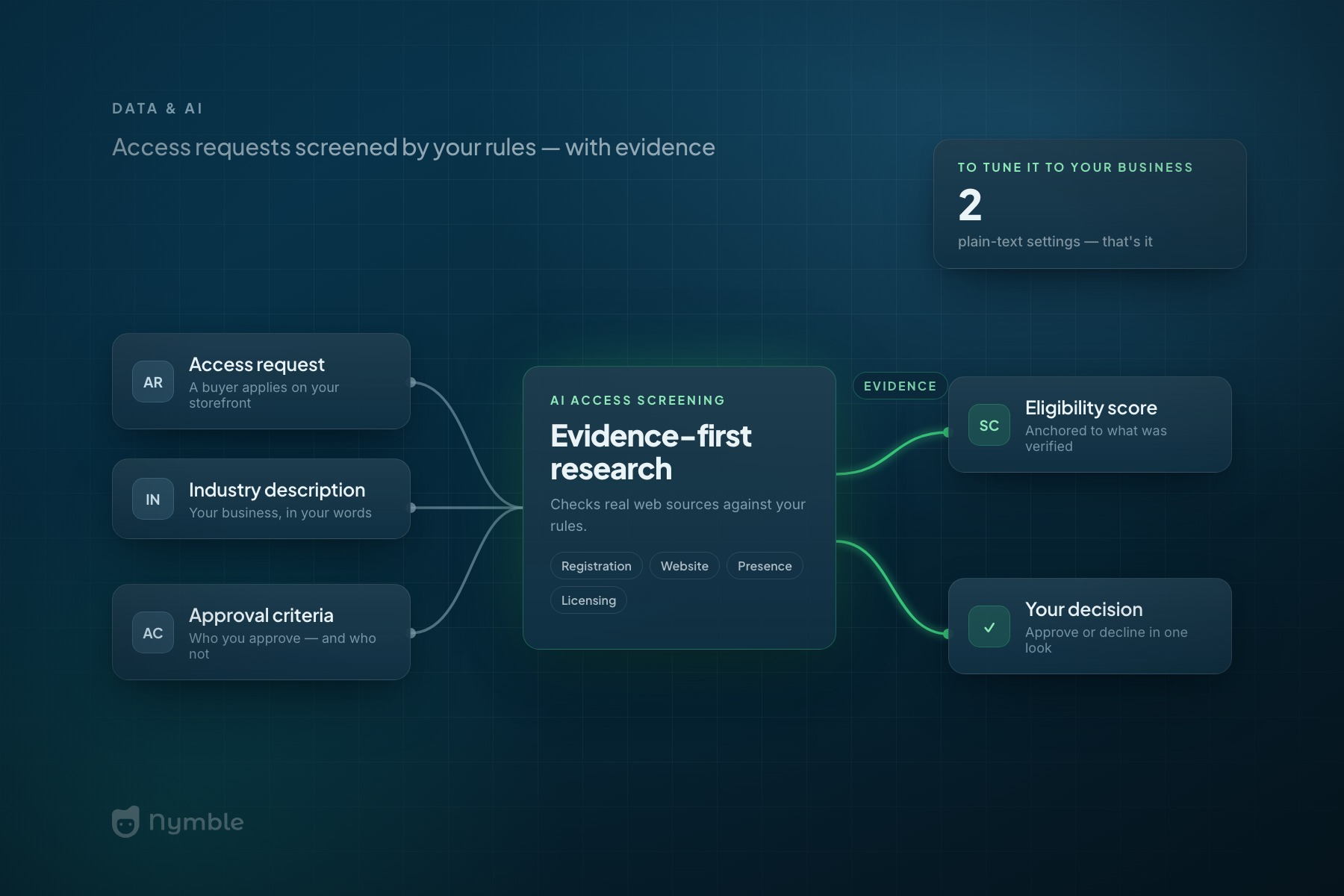
Once that groundwork is in place, the payoff is specific rather than sweeping — predictive data that flags which accounts are due to reorder, demand forecasts trained on your own order history, and access screening judged against your own approval criteria.
The bottom line
AI belongs where the data is organized, the use case is defined, and the cost of a mistake is understood. Everywhere else, “AI-powered” is often just this season’s marketing. Ask hard questions. Demand a demo on your data, not a sample set. Ask what happens when the model is wrong. The vendors with real answers are the ones worth your time.